Engineering Blog
How a structural engineer thinks.
Not tips, not tool tutorials — how a problem is framed, which method fits it, and how results are interpreted before they become decisions. Every post is built on literature, standards, benchmark studies, or real project work.

Beyond the Model
August 16, 2026
Is Your Electronic Board Ready — Mechanically and Thermally?
A working PCB is not the same as a field-reliable one. A board is also a mechanical system with its own mass, stiffness, connection points, and thermal paths.

Structural Analysis Learning Series
August 9, 2026
Three Ways to Model a Bolted Joint
Solid bolt, beam with couplings, or a tie constraint — the same joint modeled three ways in Abaqus, then compared through preload, modal and static analysis. A matching global curve is not proof that the local model is correct.
Beyond the Model
August 2, 2026
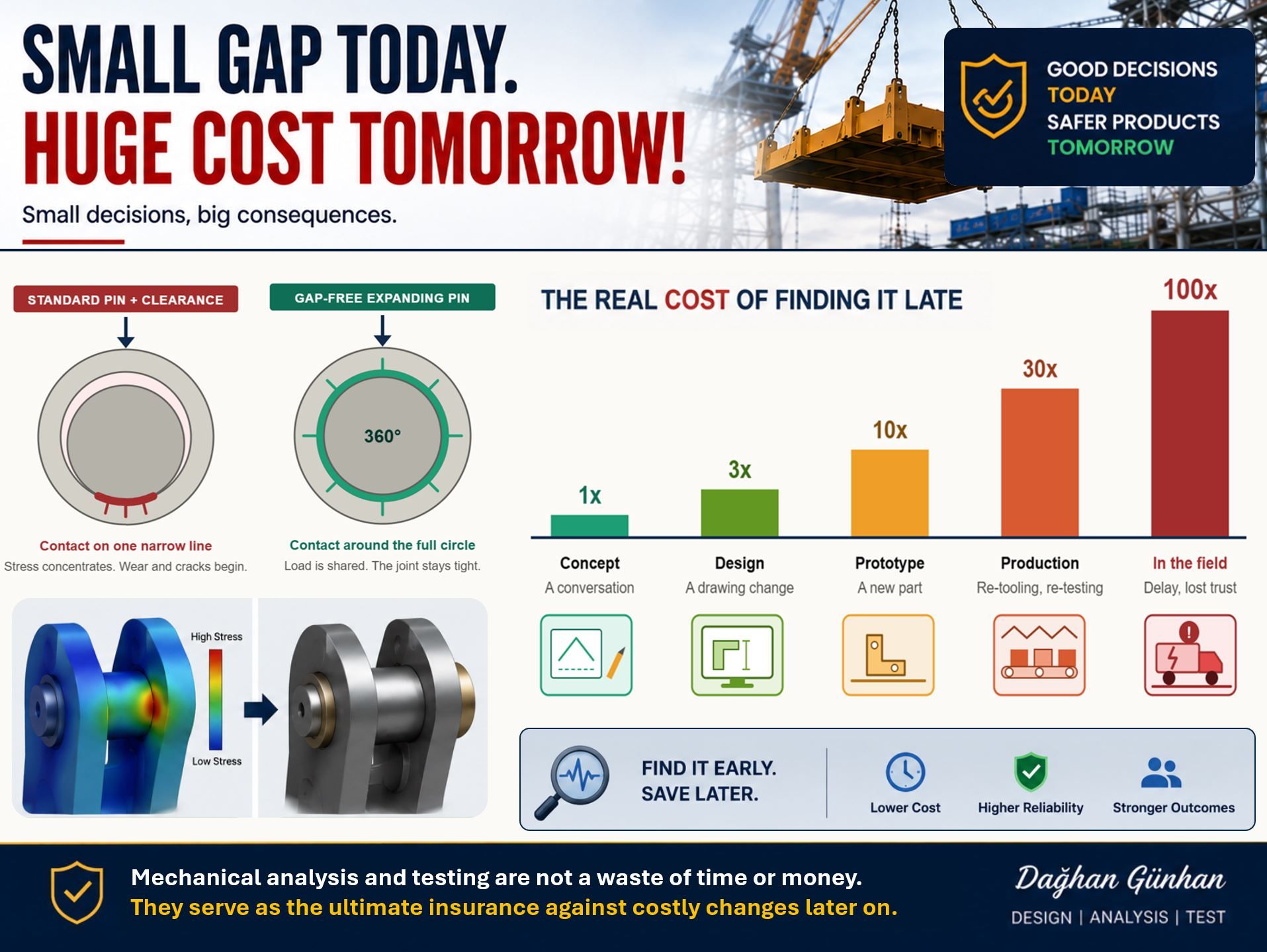
The Cost of Finding It Late
A prevented problem being invisible does not make it unimportant. A design review costs a few engineering hours; a failure in the field can cost the project.
Beyond the Model
July 26, 2026
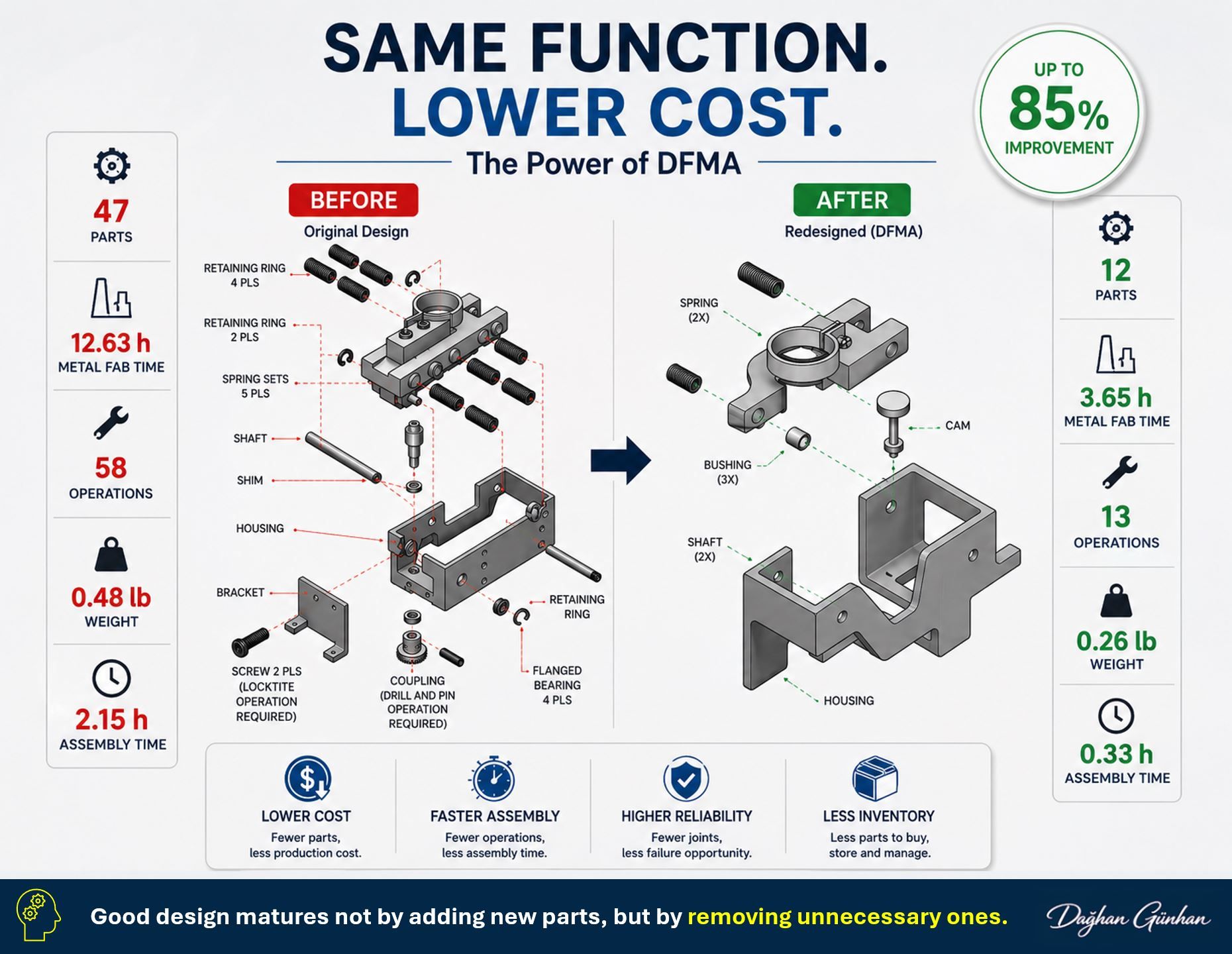
What If the Best Design Decision Is Deleting a Part?
A real DFMA case study: a thermal sight assembly went from 24 unique part designs to 8, and assembly time dropped by nearly 85% — while the product performed exactly the same function.
Structural Analysis Learning Series
July 19, 2026
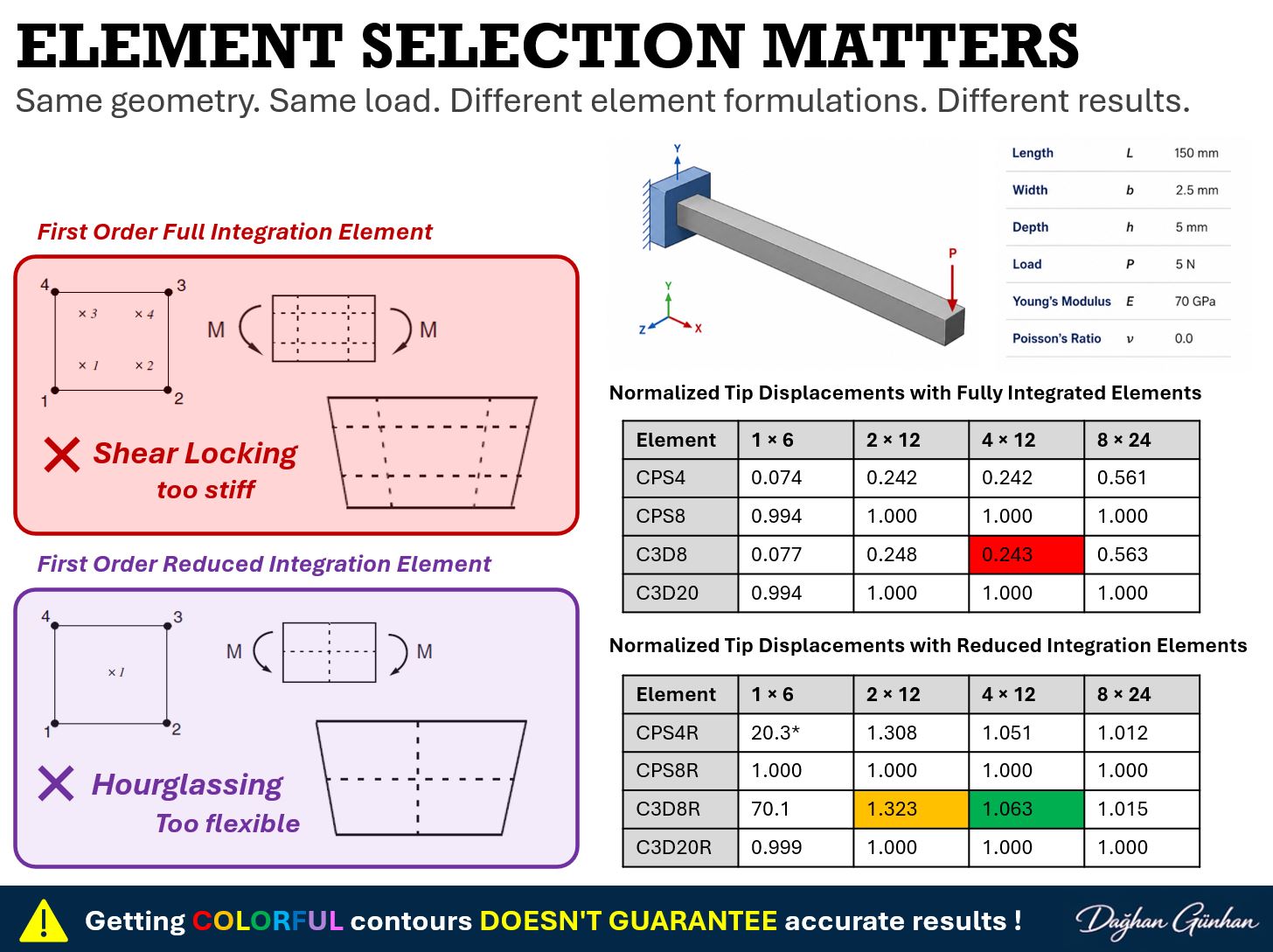
Why Does Element Selection Matter in Finite Element Analysis?
A cantilever beam benchmark shows a fully integrated solid element can carry ~75% error versus ~6.3% for a reduced-integration element — obtaining colorful contour plots doesn't necessarily mean the solution is correct.
Structural Dynamics Series
July 12, 2026
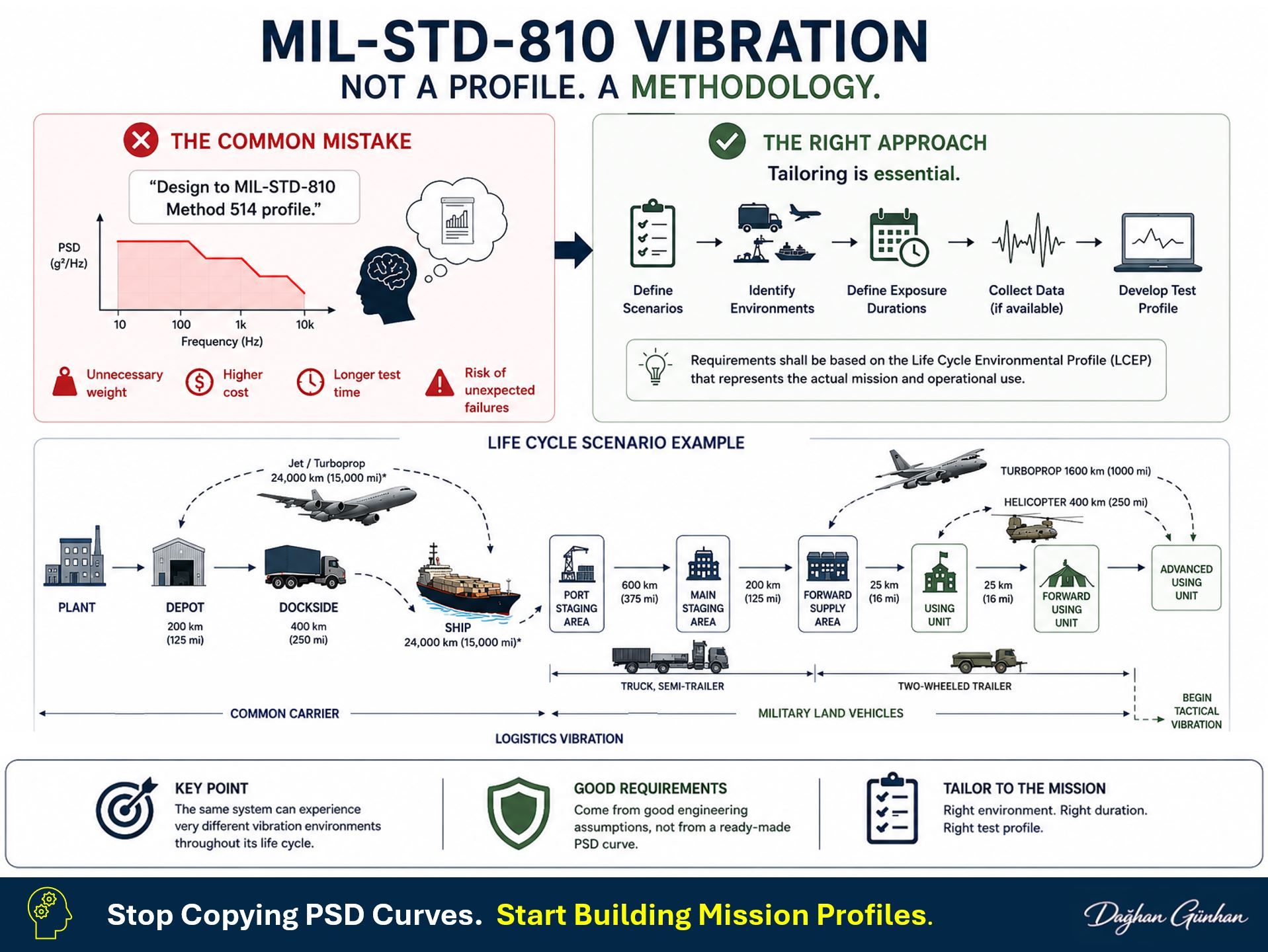
The Biggest Misconception About MIL-STD-810 Vibration Profiles
Don't let your life cycle become your cost cycle. MIL-STD-810 doesn't provide a single vibration profile that every product should satisfy — it provides a methodology for developing one.
Structural Analysis Learning Series
July 5, 2026
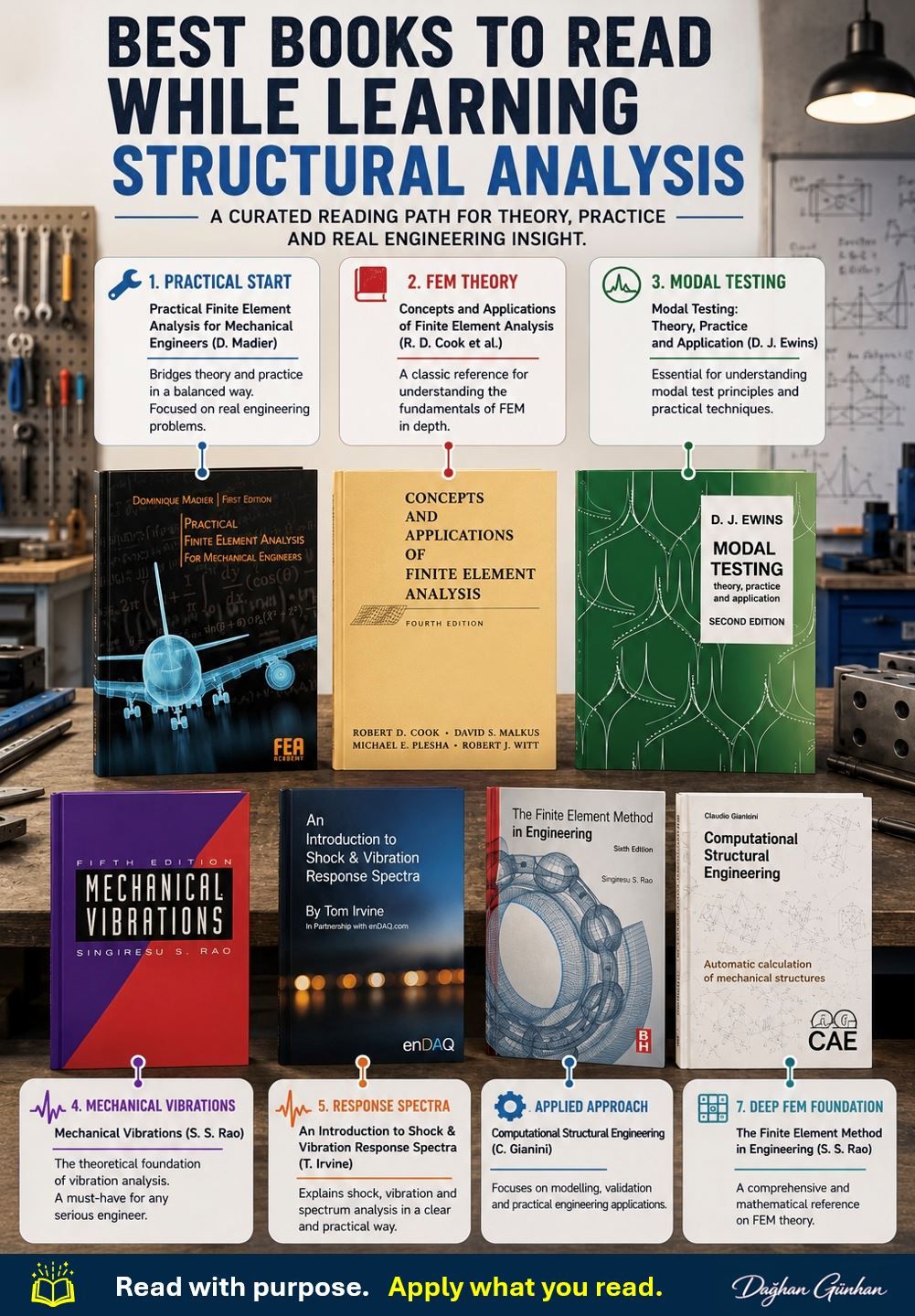
Which Books Should I Read to Learn Structural Analysis?
Progress in structural analysis comes from solving more problems, not consuming more resources — but some references are truly worth your time.
Advanced FEA Modeling Series
June 28, 2026
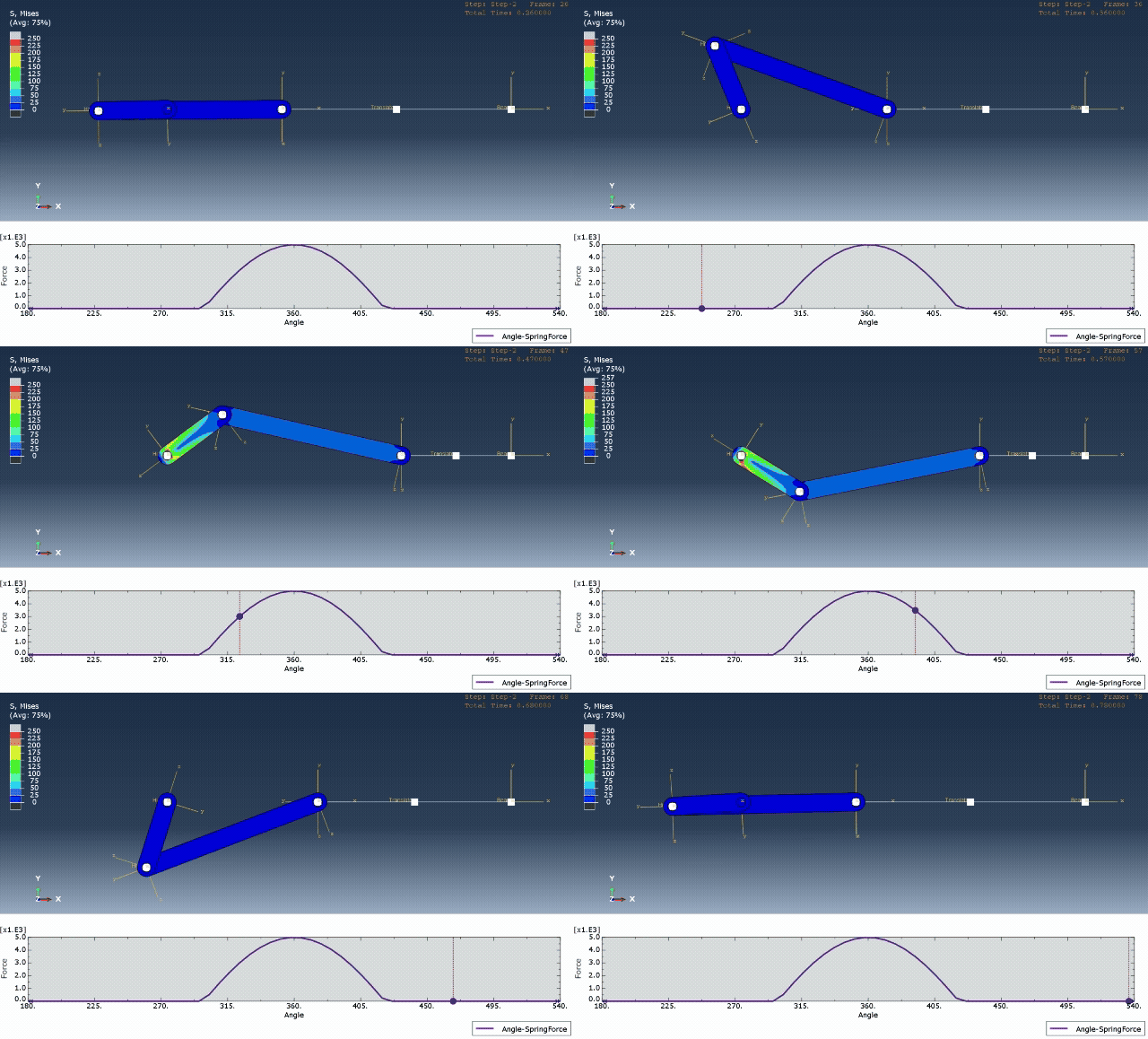
Connector Elements: More Powerful Than You Think
A good finite element model does not necessarily represent every geometric detail — it represents the correct physical behavior. A crank-slider benchmark shows why connector elements are so valuable.
Structural Analysis Learning Series
June 21, 2026
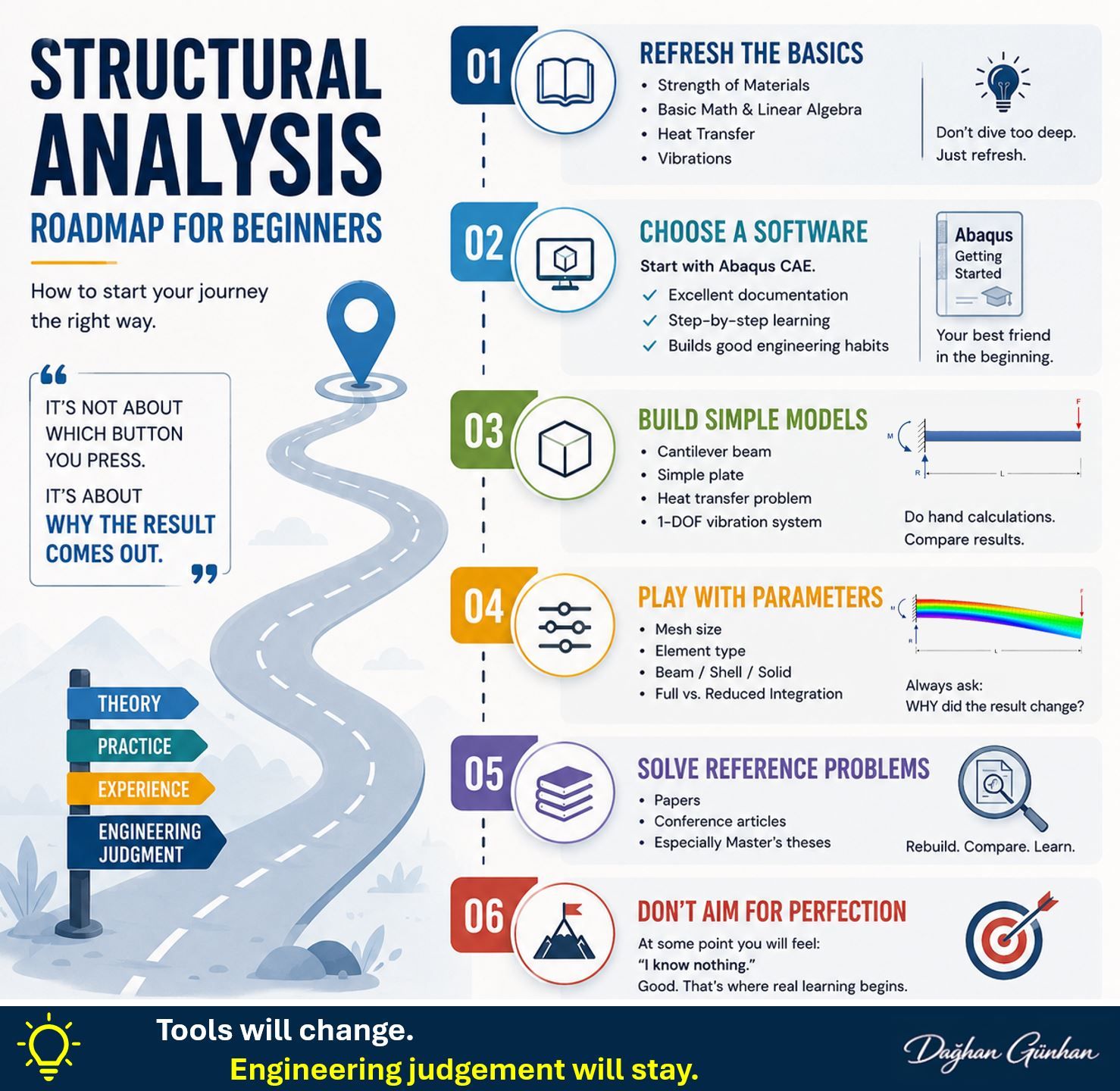
Where Should I Begin With Structural Analysis?
A six-step approach for engineers starting out in FEA: refresh the fundamentals, choose a software package, build small models, play with parameters, recreate reference studies, and don't aim for perfection.

Beyond the Model
June 14, 2026
Don't Get Lost in the Magic World of Big Models
Strength of Materials, Elasticity Theory, and FEM are not alternatives to each other — they are engineering tools built on top of one another. Sometimes a simple Excel sheet beats a million-DOF model.
Structural Dynamics Series
June 7, 2026
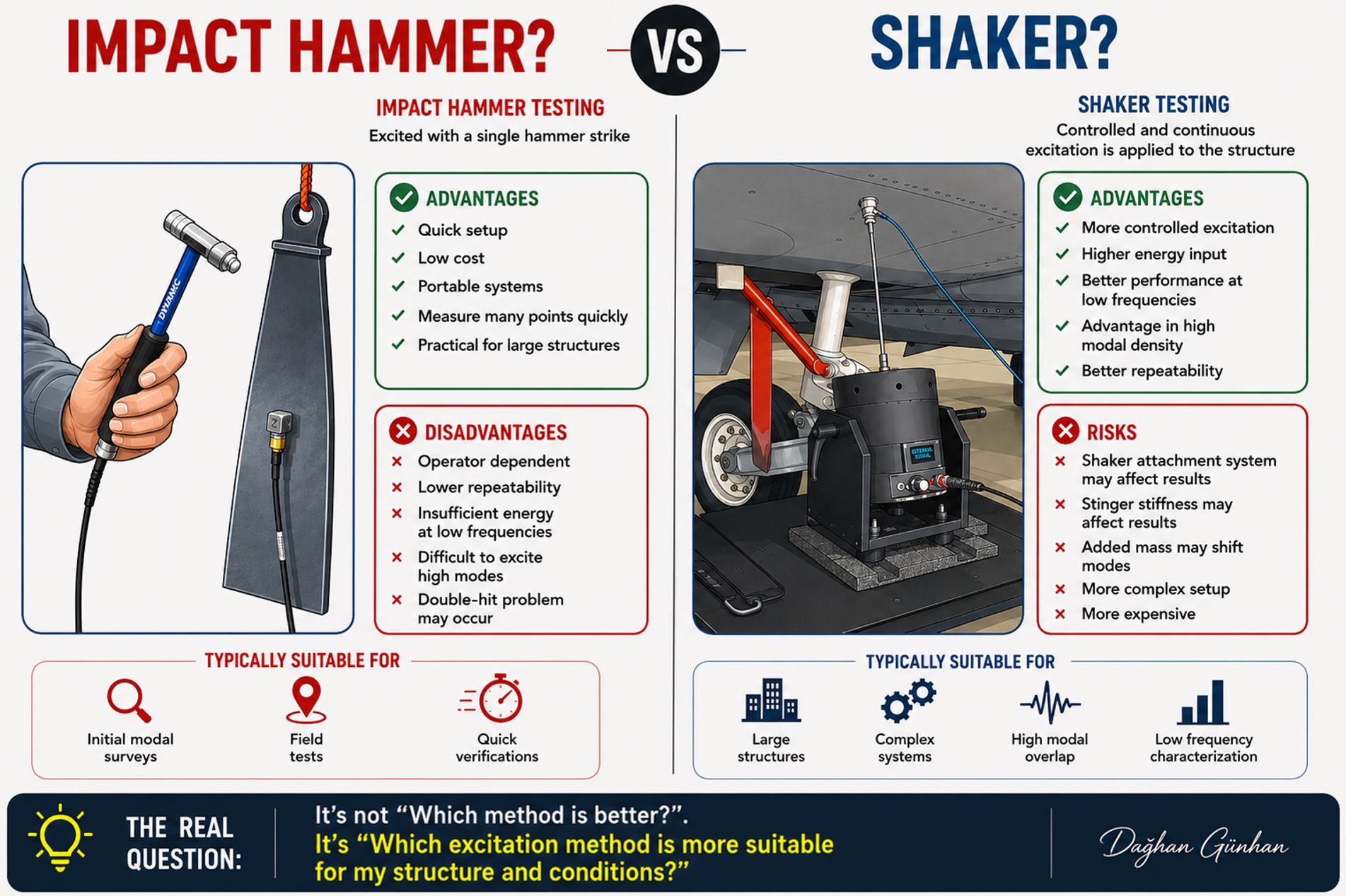
Shaker or Impact Hammer for Modal Testing?
The real question isn't which excitation method is better — it's which one is more suitable for this structure. Boundary conditions, sensor mass, and coherence all shape the answer.
Structural Dynamics Series
May 31, 2026
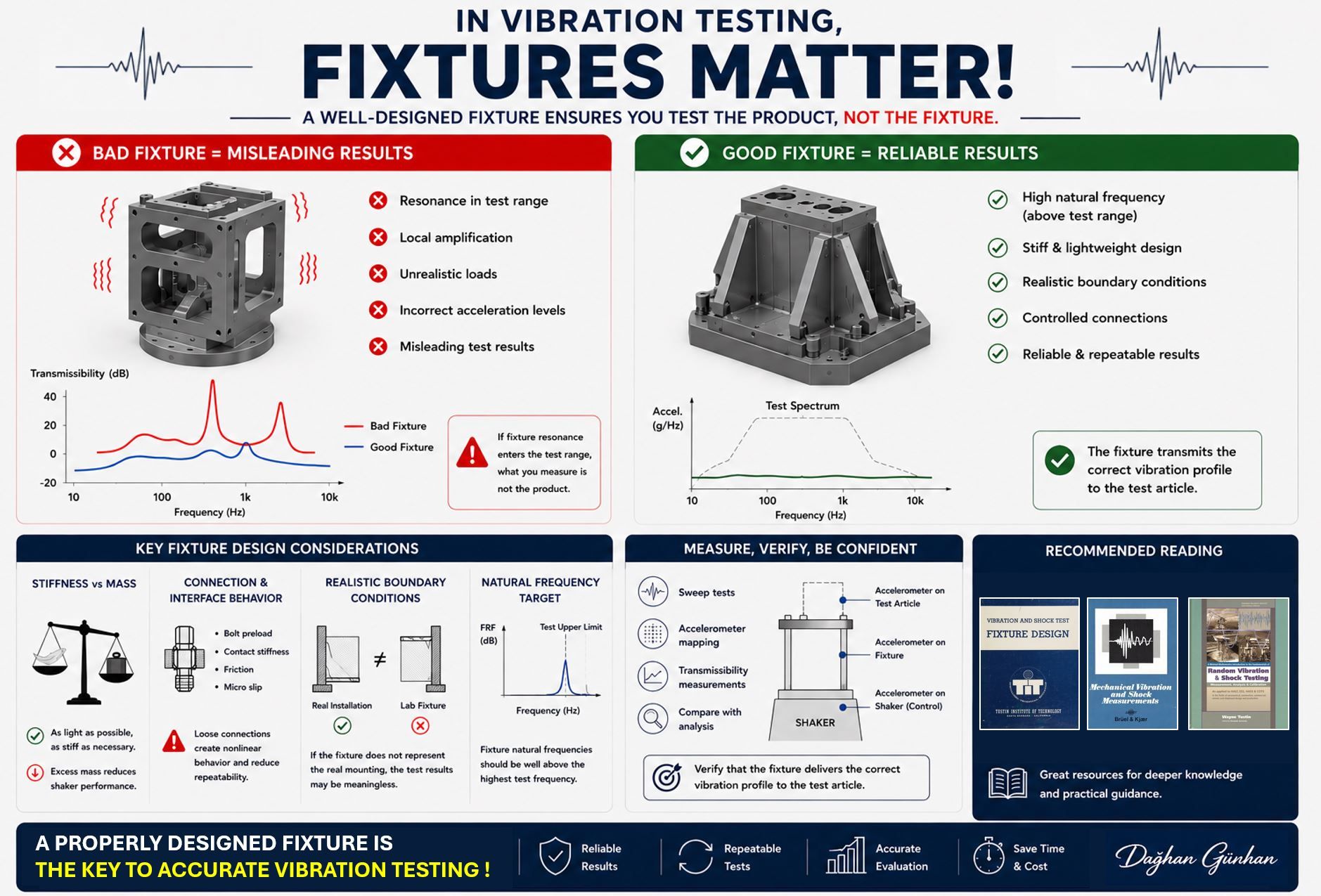
Design of Vibration Test Fixture
In vibration testing, you're not only testing the product — you're also testing the fixture. A poorly designed fixture can invalidate even a perfectly executed test.
Beyond the Model
May 24, 2026
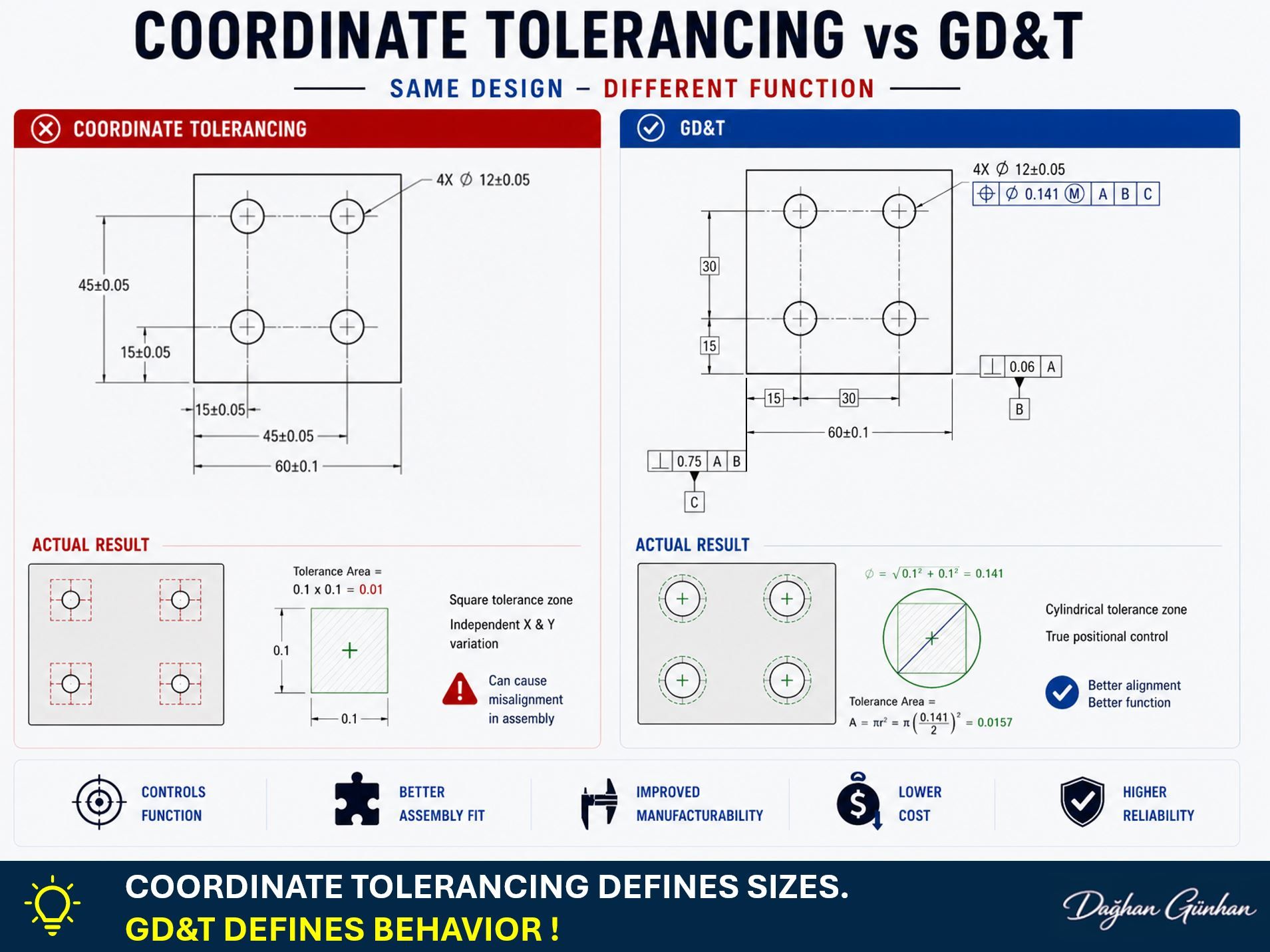
Two Parts Can Be Within Tolerance and Still Fail to Assemble
Traditional coordinate tolerancing controls dimensions, but not always function. GD&T defines behavior — and in engineering, functional behavior is what truly matters.
Beyond the Model
May 17, 2026
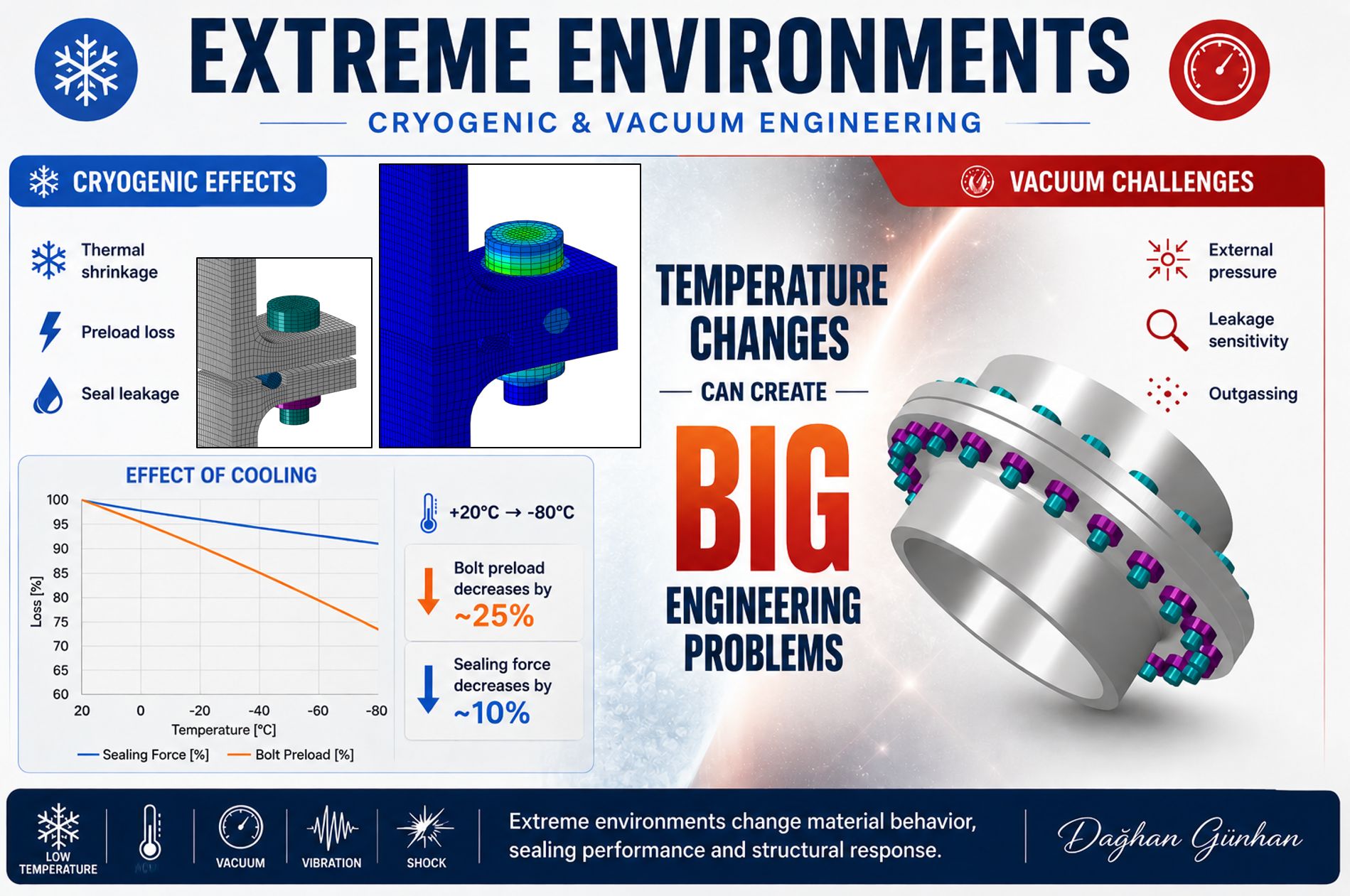
Extreme Environments: Cryogenic and Vacuum Systems
A design that works perfectly at room temperature may fail completely in a cryogenic environment. In extreme environments, small details can become very big problems.
Structural Dynamics Series
May 10, 2026
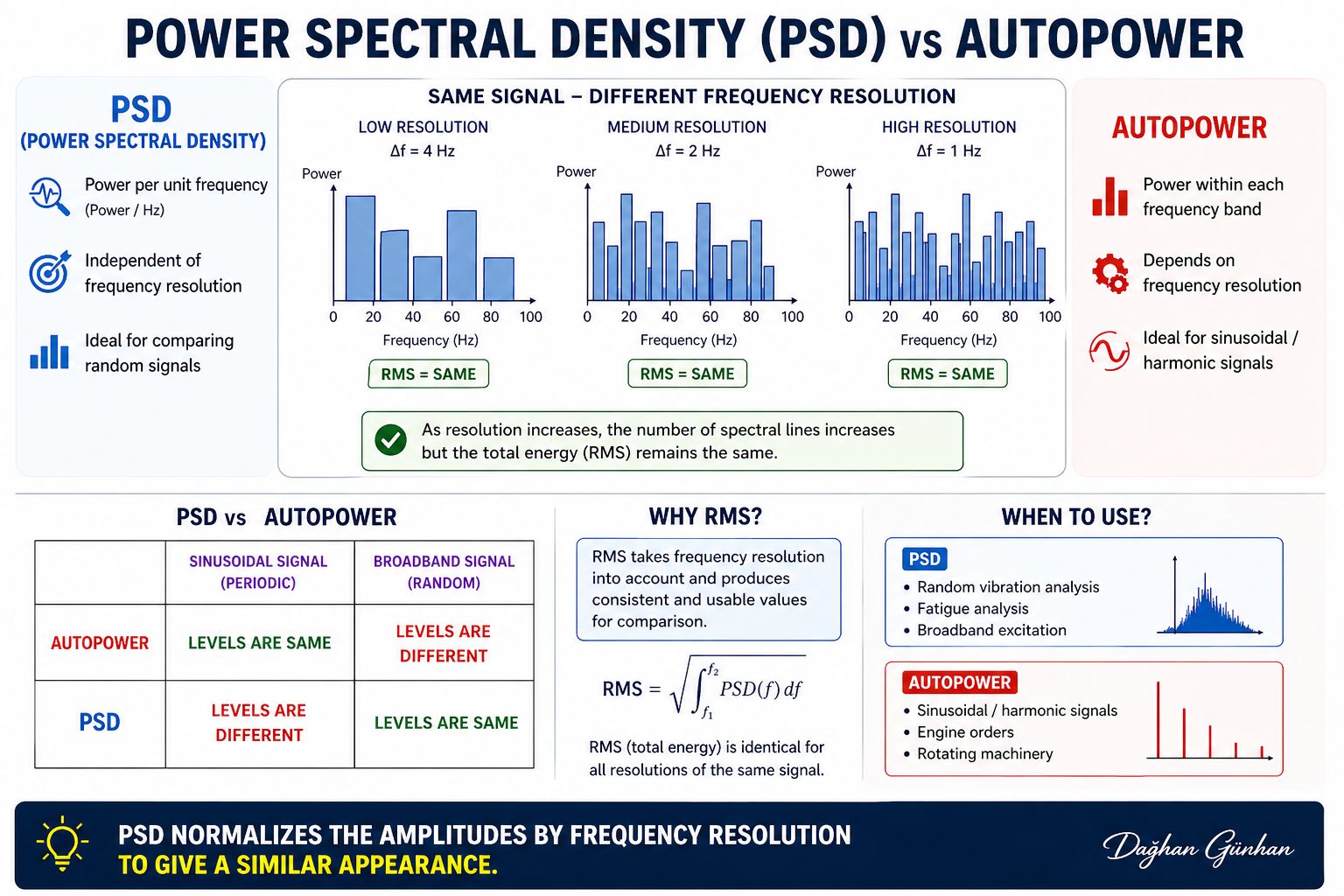
Same Data, Different Plots — Which One Is Correct?
Should you evaluate your signal using PSD or Autopower? The amplitudes change with frequency resolution — but the total energy doesn't. Understanding why matters.
Beyond the Model
May 3, 2026
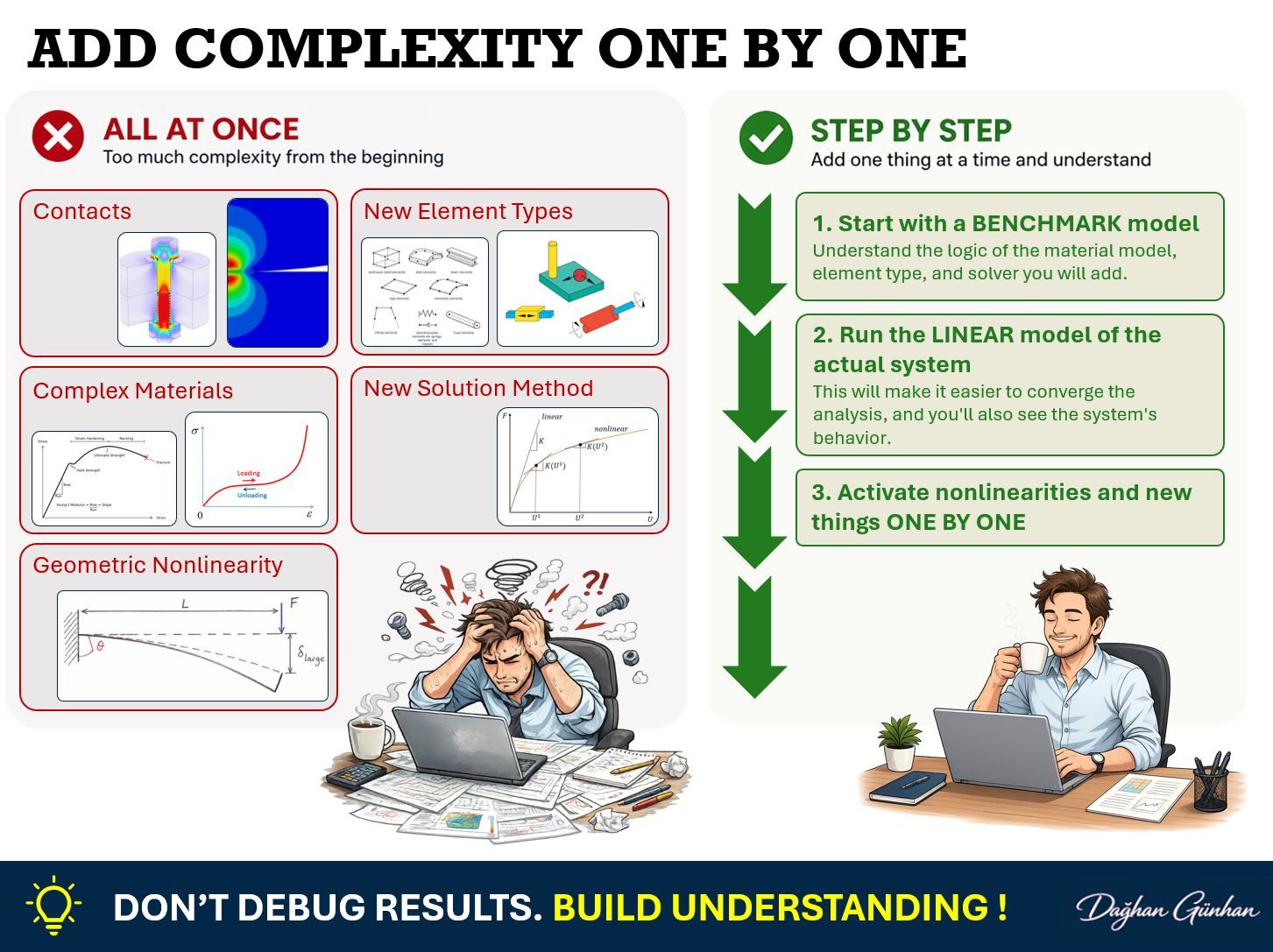
Add New Things to Your Model One at a Time
Whether you're new to analysis or expanding your capabilities, the biggest mistake is adding multiple tools and features at once, then asking why the result looks the way it does.
Structural Dynamics Series
April 26, 2026
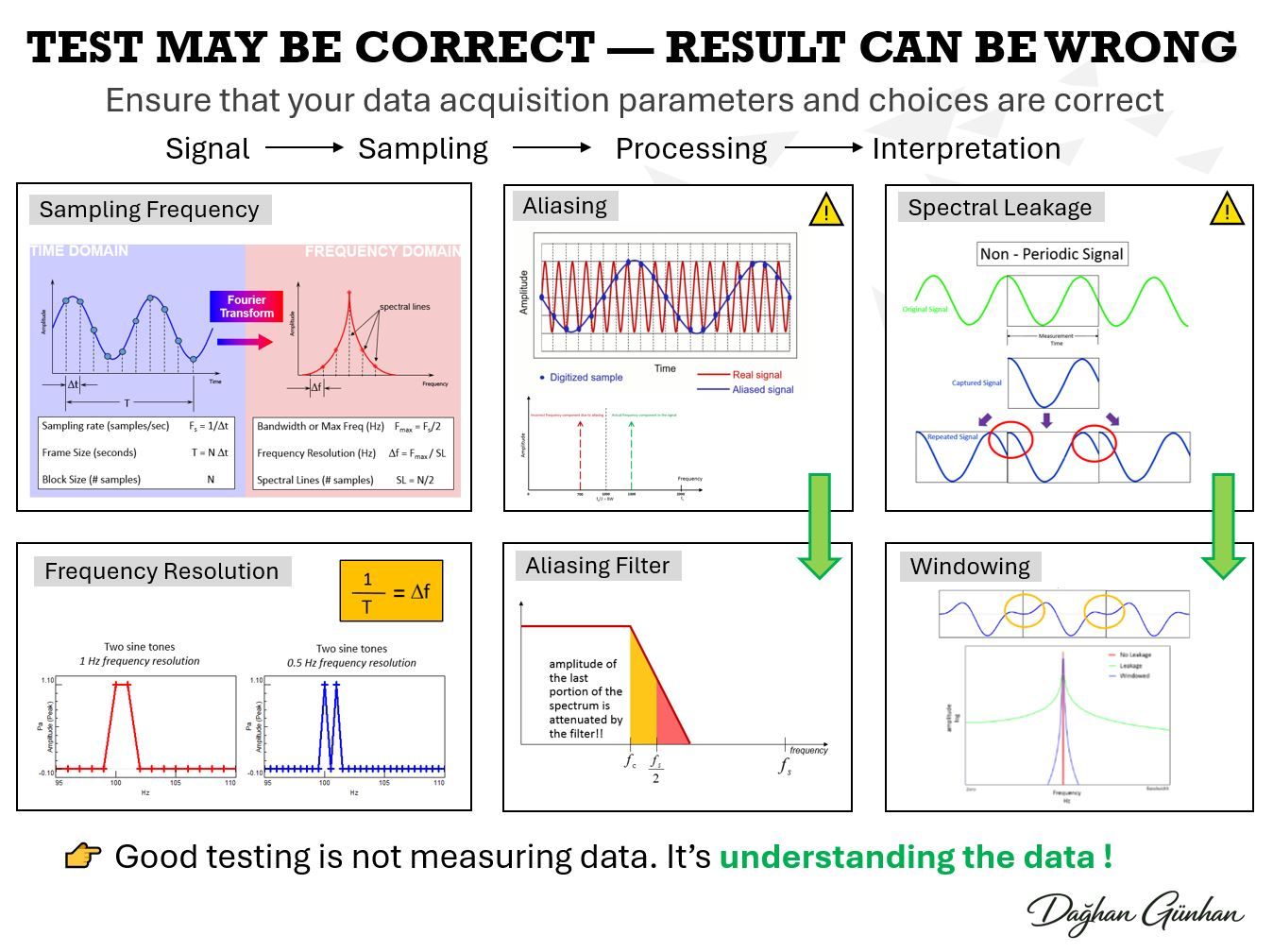
The Test May Be Correct — But the Result Can Be Wrong
Sampling frequency, frame size, and windowing all shape what a vibration test actually tells you. Good test engineering isn't just about measuring data — it's about truly understanding what you measure.
Beyond the Model
April 19, 2026
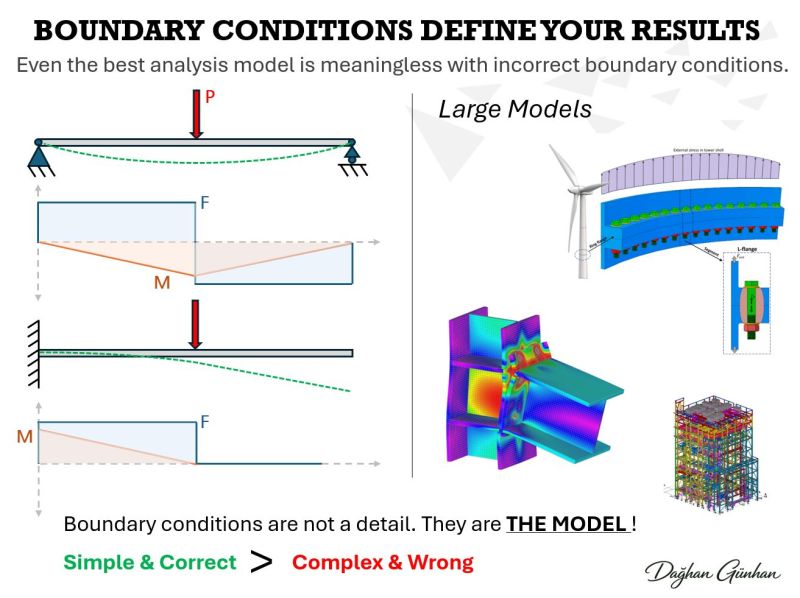
A Large Portion of Your Results Comes From Boundary Conditions
No matter how detailed your model is, incorrectly defined boundary conditions can lead you to completely wrong results — even the critical region can change.
Structural Dynamics Series
April 12, 2026
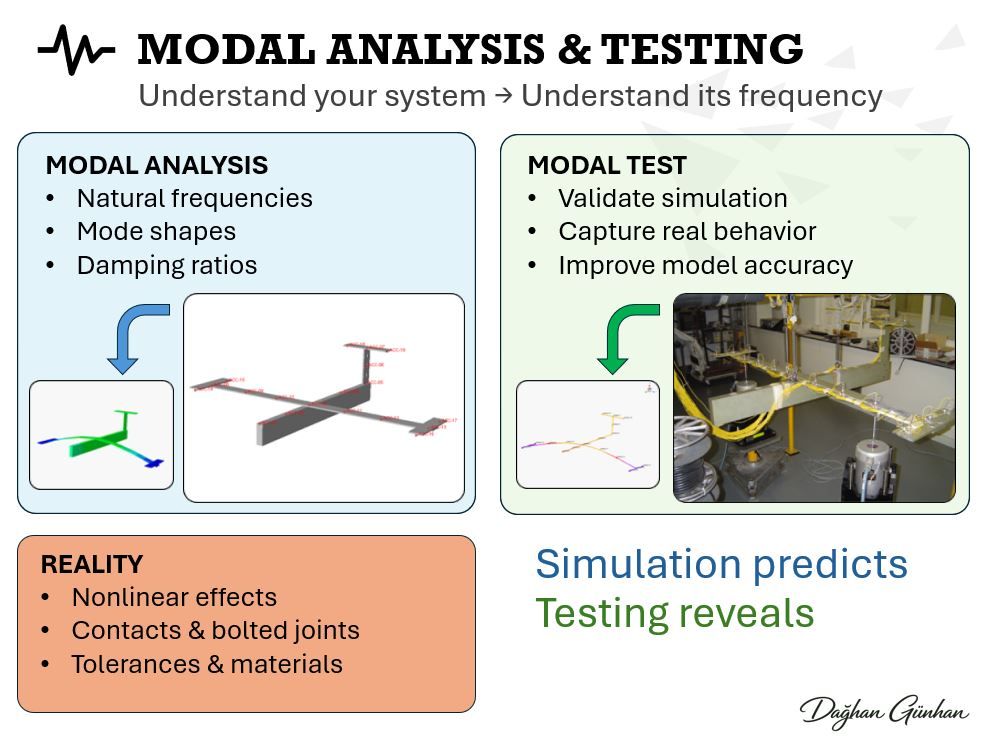
Modal Analysis & Testing: Understand Your System, Understand Its Frequency
Natural frequencies, mode shapes, and damping ratios aren't just results — they're the characteristic properties of a system. But modal analysis assumes linear behavior, and real systems never quite are.