Engineering Blog
How a structural engineer thinks.
Not tips, not tool tutorials — how a problem is framed, which method fits it, and how results are interpreted before they become decisions. Every post is built on literature, standards, benchmark studies, or real project work.
For specialists in vibration, shock and test.
Dynamics, modal analysis, vibration and shock qualification, MIL-STD interpretation, and the relationship between simulation and physical testing.

Structural Dynamics Series
July 12, 2026
The Biggest Misconception About MIL-STD-810 Vibration Profiles
Don't let your life cycle become your cost cycle. MIL-STD-810 doesn't provide a single vibration profile that every product should satisfy — it provides a methodology for developing one.
Structural Dynamics Series
June 7, 2026
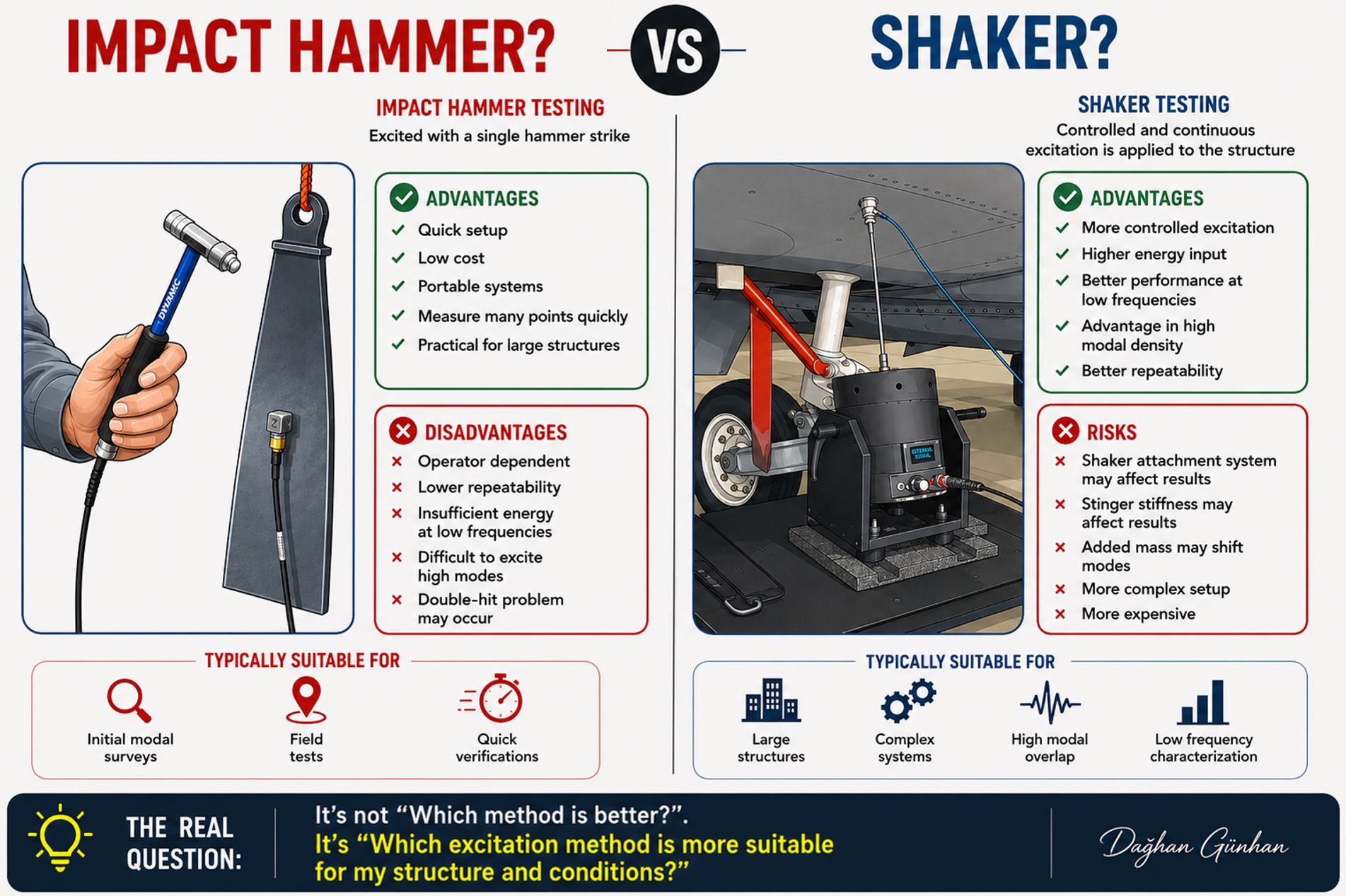
Shaker or Impact Hammer for Modal Testing?
The real question isn't which excitation method is better — it's which one is more suitable for this structure. Boundary conditions, sensor mass, and coherence all shape the answer.
Structural Dynamics Series
May 31, 2026
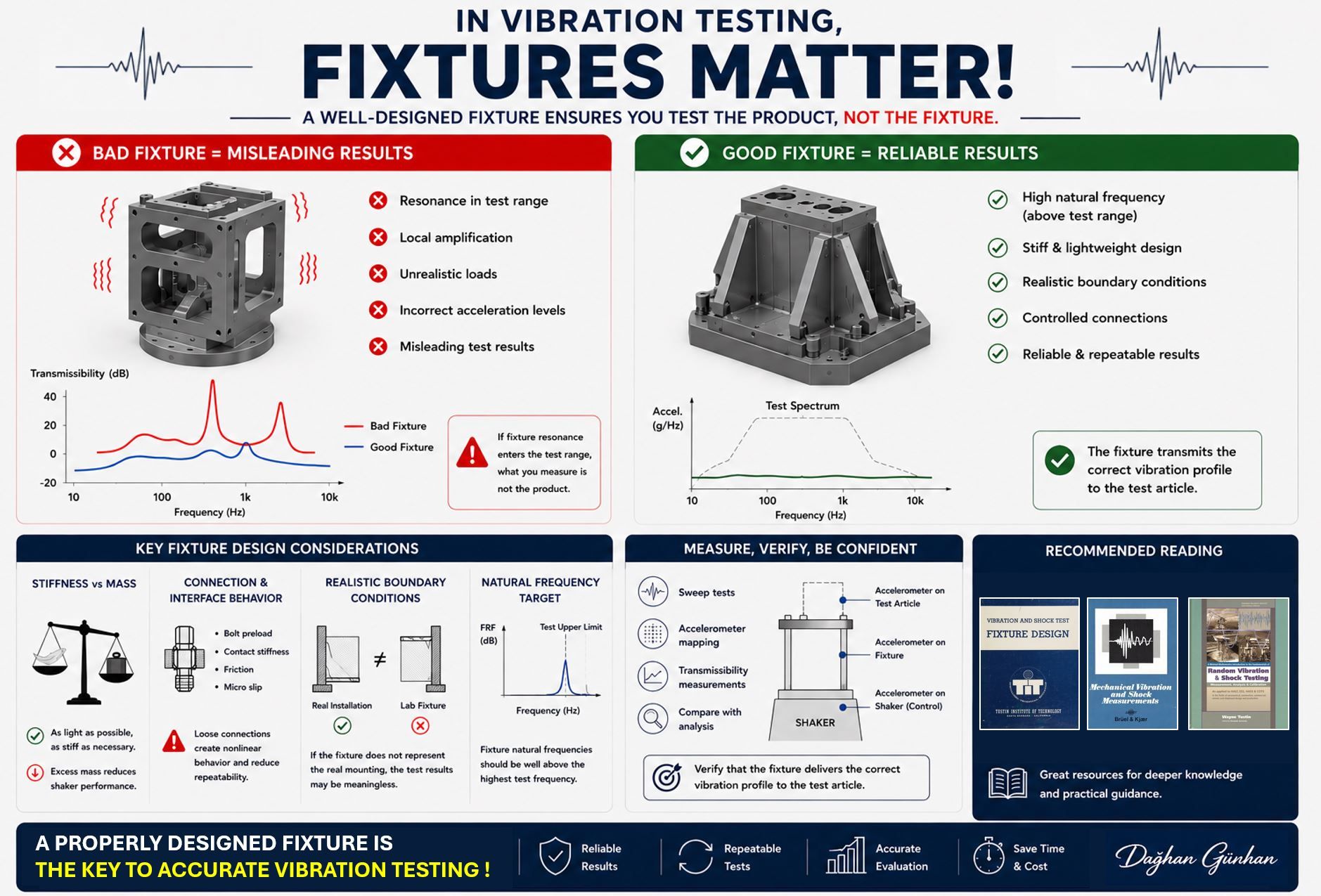
Design of Vibration Test Fixture
In vibration testing, you're not only testing the product — you're also testing the fixture. A poorly designed fixture can invalidate even a perfectly executed test.
Structural Dynamics Series
May 10, 2026
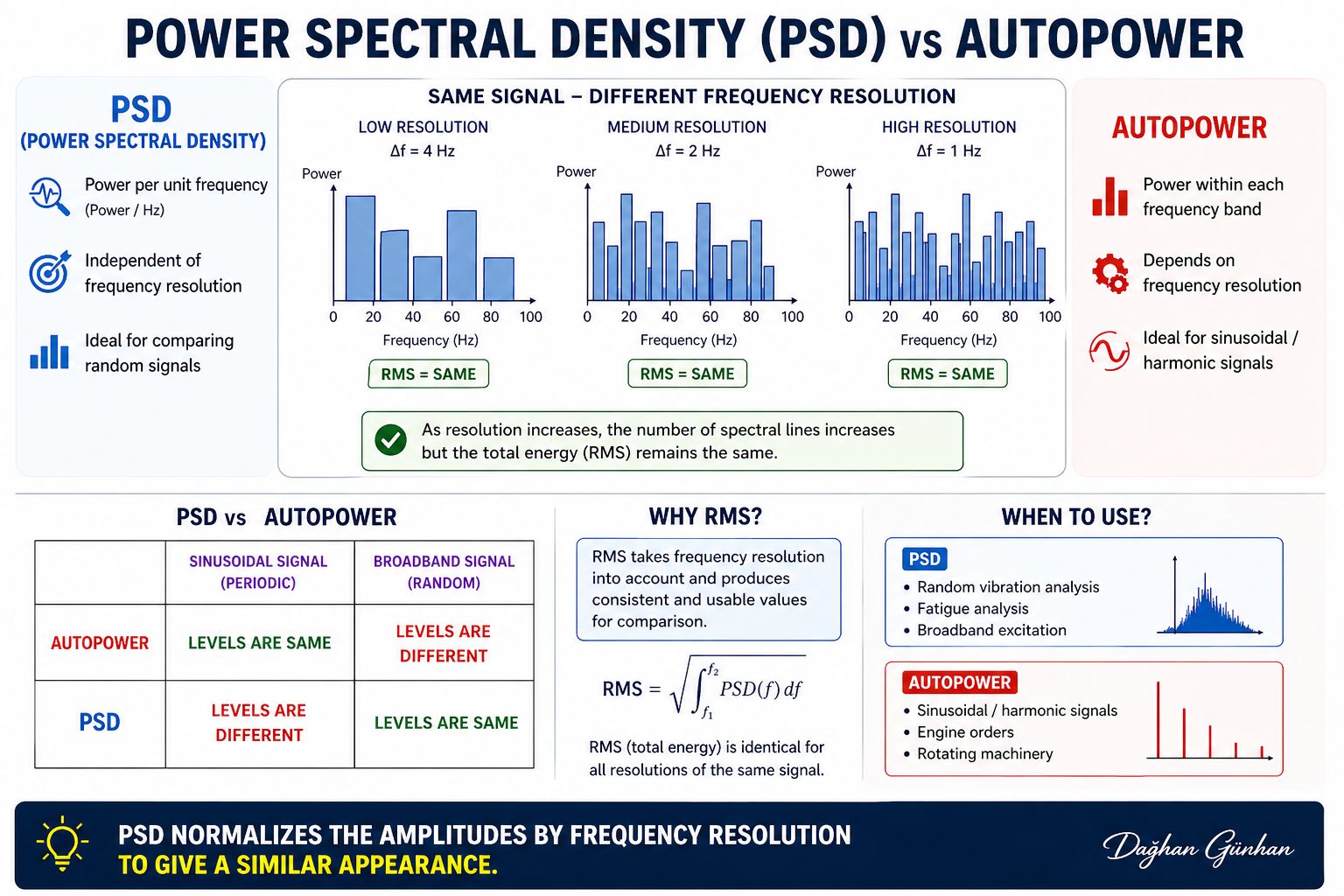
Same Data, Different Plots — Which One Is Correct?
Should you evaluate your signal using PSD or Autopower? The amplitudes change with frequency resolution — but the total energy doesn't. Understanding why matters.
Structural Dynamics Series
April 26, 2026
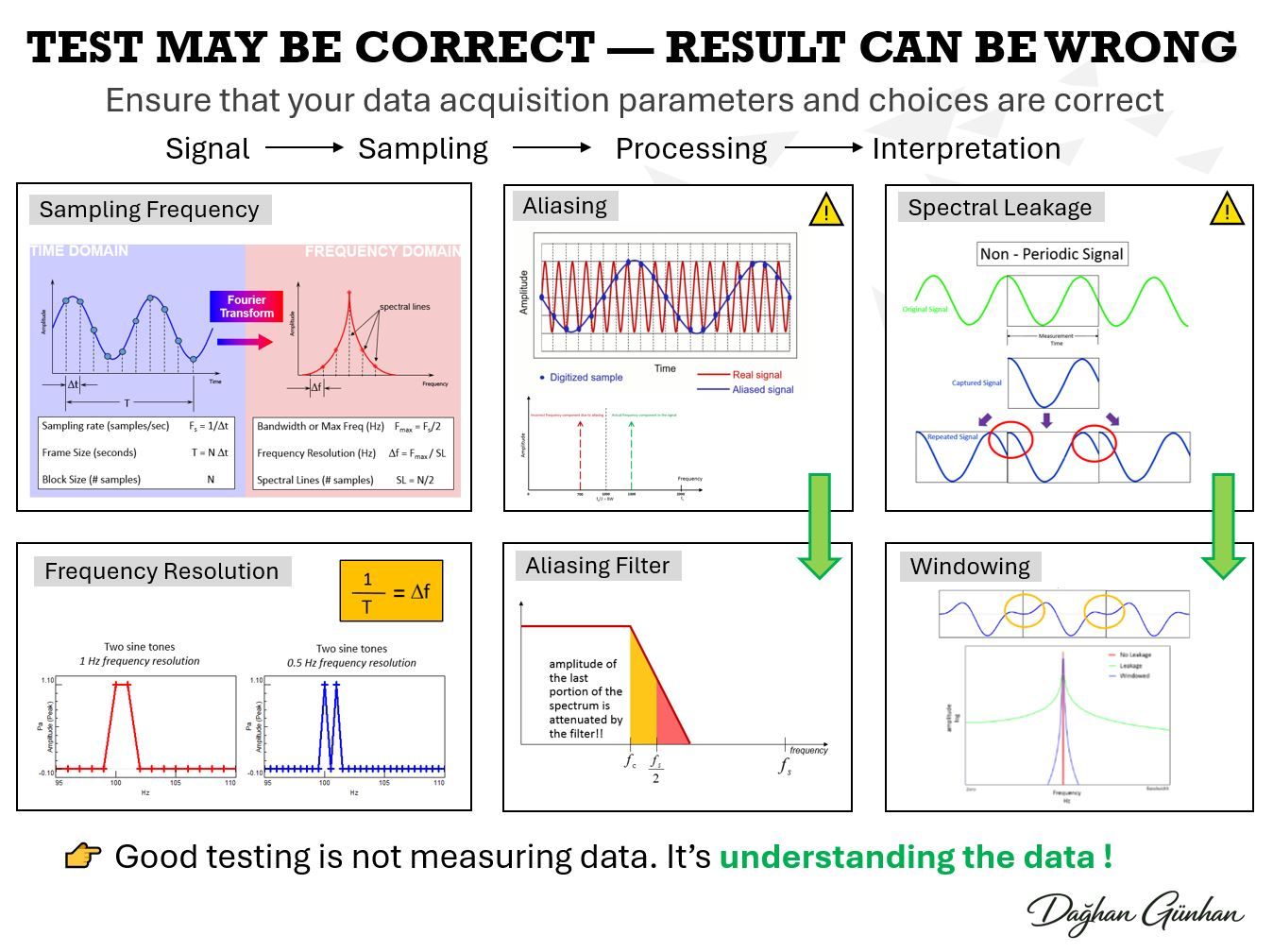
The Test May Be Correct — But the Result Can Be Wrong
Sampling frequency, frame size, and windowing all shape what a vibration test actually tells you. Good test engineering isn't just about measuring data — it's about truly understanding what you measure.
Structural Dynamics Series
April 12, 2026
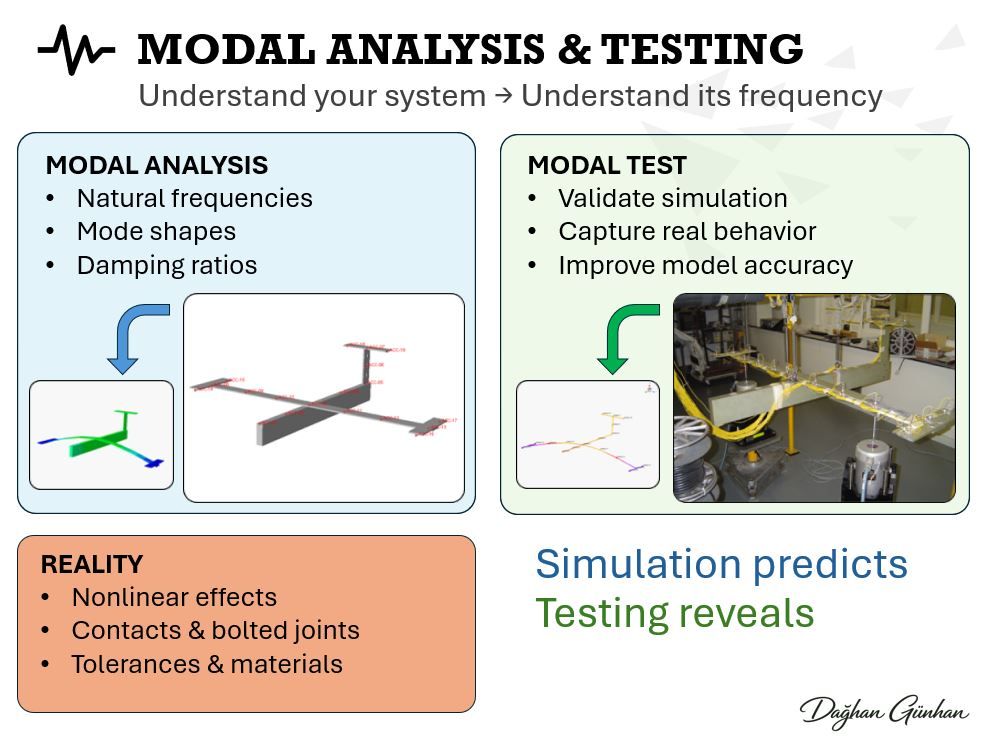
Modal Analysis & Testing: Understand Your System, Understand Its Frequency
Natural frequencies, mode shapes, and damping ratios aren't just results — they're the characteristic properties of a system. But modal analysis assumes linear behavior, and real systems never quite are.